I do not publish links or repositories for client projects: they are live systems holding real customer data. For my own projects I build demos anyone can open, and I am glad to walk through code in a conversation. The first client build is under way — the moment it is live, the link and the screenshot will be here.
Demo project
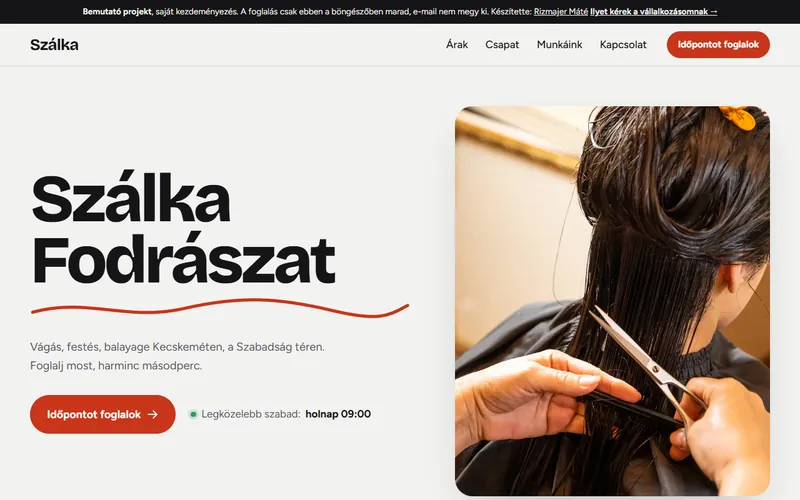
Szalka Hair Salon: site with booking
Demo salon site: prices on a hair-colour swatch ring, stylists in round mirrors with their own next free time, and a comb for picking the time, one tooth per half hour. My own initiative, not client work.
Design, build, deploy
The problem
A small salon needs a simple booker that works on a phone, without coordinating in Excel or chat.
What I built
Service picker, free slots, booking form, confirmation screen and admin list. The demo uses localStorage; production would add Supabase + email.
Stack
Demo project
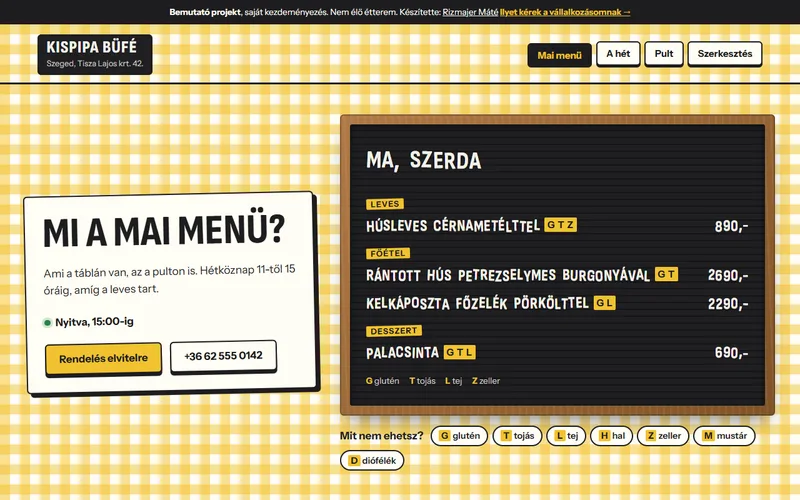
Kispipa Buffet: daily menu
Demo daily menu for a buffet: today's menu on a felt letterboard, with an allergen filter. Takeaway can be ordered ahead, every order is a stamp on a loyalty card kept on the phone, and the week sits on tear-off calendar pages. My own initiative, not client work.
Design, build, deploy
The problem
A small eatery often posts the daily menu as a photo of a printout on Facebook: hard to find, hard to update.
What I built
Public today board, week overview, password editor. The demo saves to localStorage; production would use Supabase auth + a table.
Stack
Demo project
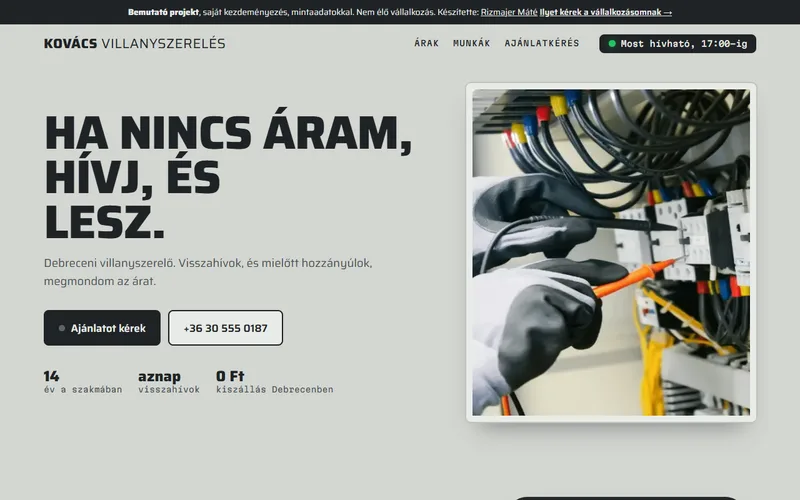
Kovacs Electrical: electrician site
Demo site for an electrician: prices on a multimeter dial, a before and after slider, the process in wire colours, and a quote form where you flip circuit breakers. My own initiative, not client work.
Design, build, deploy
The problem
A tradesperson does not need a shop, just a page that loads instantly on a phone, says what they do and where, and can be called with one tap.
What I built
One page in plain HTML and CSS, no framework, with a short script for the form. Local business schema.org data. The demo form sends no email; production would put a form service behind it.
Stack
Demo project
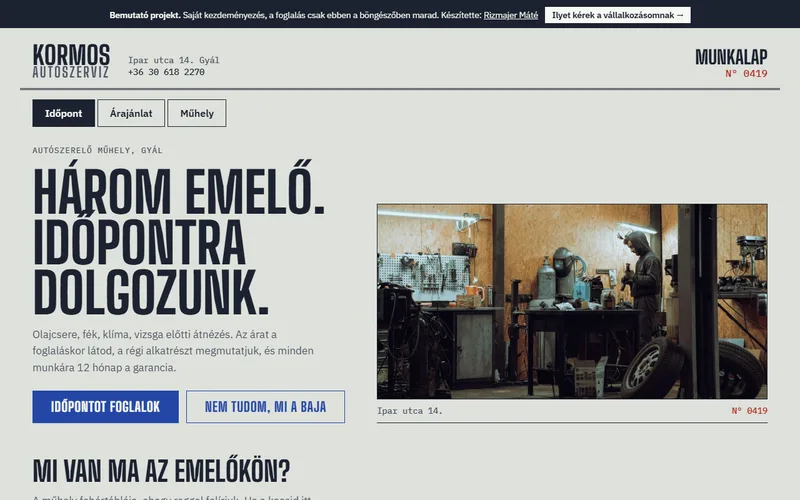
Kormos Garage: booking and quotes
Demo garage site: the workshop whiteboard with the lifts of the day and the next free drop-off, booking a slot by number plate, quote requests and a pre-inspection checklist. My own initiative, not client work.
Design, build, deploy
The problem
In a small garage the phone rings all day: when can I bring it, how much will it be. The mechanic answers from under a car, the slot goes into a notebook, the quote stays in his head.
What I built
Two ways in: people who know what they need book a slot; people who only know it "knocks" describe it and ask for a call back. Slot logic is shared with the salon demo, with tests. The demo uses localStorage; production would add a database and SMS reminders.
Stack
Demo project
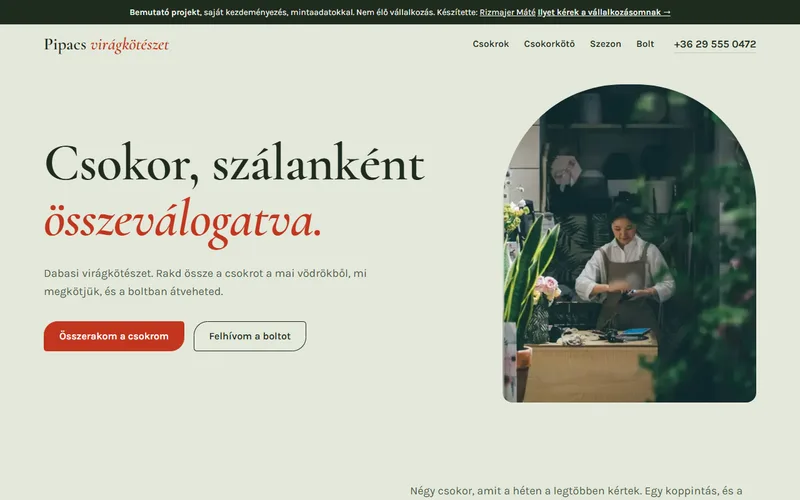
Pipacs Florist: bouquet builder
Demo florist: ready bouquets on twine that load into the builder with one tap, where you put the bouquet together stem by stem from today's stock. A season calendar and a care card. My own initiative, not client work.
Design, build, deploy
The problem
A small florist site usually has a photo gallery and a phone number. Anyone who wants a bouquet calls and tries to describe it in words.
What I built
A bouquet builder from today's buckets: flowers go to the middle, greens to the edge, and stems glide to their new place. Wrapping, card, pickup day and time. The bouquet logic is a tested module.
Stack
Demo project
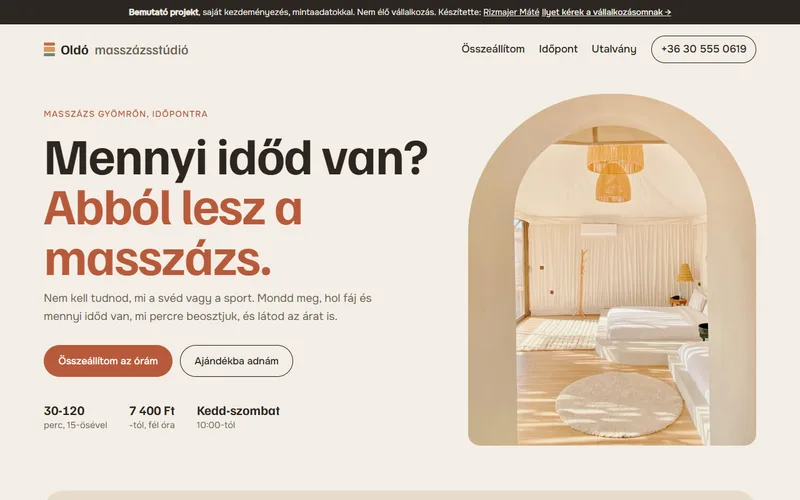
Oldo Massage Studio: how much time do you have?
Demo massage studio: say how much time you have and where it hurts, and the site splits the session minute by minute, with the price and the free slots it fits into. A gift voucher in minutes with a live preview. My own initiative, not client work.
Design, build, deploy
The problem
People booking a massage rarely know whether they need Swedish or sports massage. They know where it hurts and how much time they have. Most salon sites still start with treatment names.
What I built
It splits the chosen time between the areas in 5-minute steps, gives every area a minimum, and says how long is needed when they do not fit. Then it shows free slots that fit the length and end before closing. Both are tested modules.
Stack
Demo project
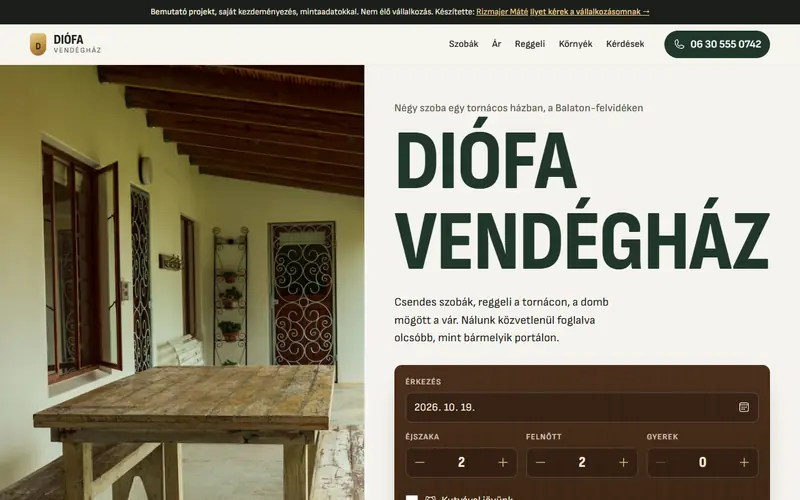
Diofa Guesthouse: a key rack and direct booking
Demo guesthouse: only the keys of rooms free on the chosen dates hang on the reception key rack, the price includes the tourist tax, and the direct price sits next to the portal price. My own initiative, not client work.
Design, build, deploy
The problem
A small guesthouse gets most guests through booking portals and pays about 15% commission on each. Its own site is usually a photo gallery with a phone number: no availability, no price, no reason to book direct.
What I built
Given the dates, guests and a dog, only the keys of suitable rooms hang; booked hooks say in chalk when they free up. The ticket prices line by line, with tourist tax for adults only. If nothing fits, one button jumps to the first free date. The request ends by showing what the guest gets and what the owner sees: zero commission. The pricing is a tested module.
Stack
Demo project
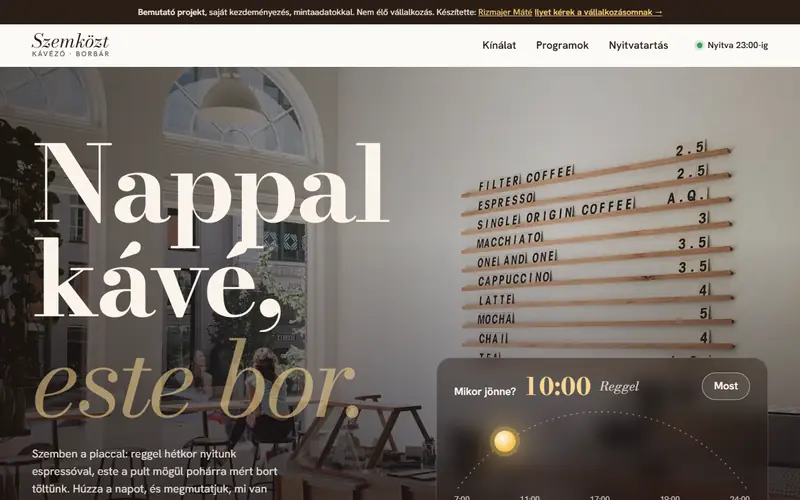
Szemkozt cafe and wine bar: coffee by day, wine at night
Demo cafe that turns into a wine bar at night: dragging the sun along its arc switches the whole page from day to evening, menu included. Tables for the evening events can be requested with live seat counts. My own initiative, not client work.
Design, build, deploy
The problem
A cafe that becomes a wine bar at night is really two places: people look for coffee in the morning and for wine and events in the evening. A typical site shows both at once, so neither lands, and evening tables get booked by phone, if at all.
What I built
The full-screen landing photo fades from day to evening with the chosen time; the dial is an arc the sun (the moon at night) travels along. The menu redraws only when the daypart changes. Events show the seats left, and a request ends on the bar view. Opening hours and events come from a tested module.
Stack
Demo project
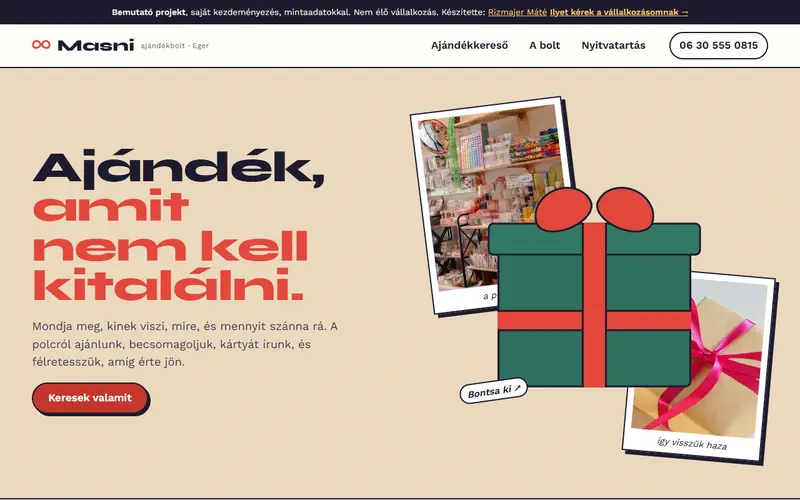
Masni gift shop: gifts you do not have to guess
Demo gift shop: the landing present wraps itself on load and pops open on a click with three picks from the shelf. The gift finder suggests from stock, the wrap and card show live, and the shop holds the gift. My own initiative, not client work.
Design, build, deploy
The problem
Someone buying a gift wants an idea, not a product. A small shop site usually shows photos and opening hours, so the shopper never learns whether there is something for their budget, and orders online instead.
What I built
Three questions (who for, what for, how much) suggest from real stock and flag what sold out. The chosen gift is drawn as a CSS present that changes live with the paper and the card text, and a short code holds it until the next closing. Suggestions and holds are a tested module.
Stack
Demo project
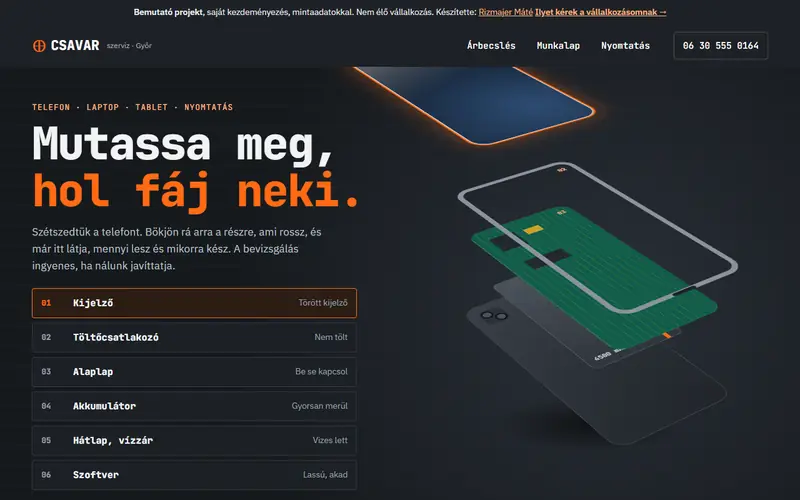
Csavar repair shop: show where it hurts
Demo phone and computer repair shop: the landing shows a phone taken apart, and every layer is a fault. Tapping the broken part shows the price and the ready date right there; repairs can be tracked by job number, and there is a print calculator. My own initiative, not client work.
Design, build, deploy
The problem
The first two questions anyone calls a repair shop with are always the same: how much and by when. Most shop sites do not answer them, so the phone rings all day, and whoever cannot get through calls the next shop.
What I built
A CSS 3D phone pulls apart: the screen, the frame with the charging port, the board, the battery and the back are one fault each. The chosen layer slides out like a drawer, with the price range and ready date beside it. The full estimate also covers device and brand, printed as a thermal receipt. Estimates, job tracking and printing are a tested module.
Stack
Demo project
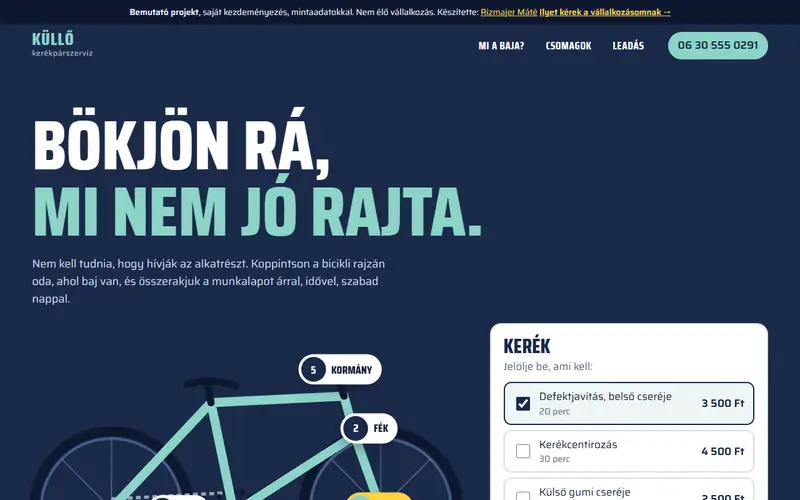
Kullo bike service: point at what is wrong
Demo bike service: tap the broken part on the bike drawing and the work order builds itself with price and time. The drawing spins with the scroll and zooms to the chosen part, and drop-off only offers days the job fits into. My own initiative, not client work.
Design, build, deploy
The problem
Most people bringing a bike in do not know what the broken part is called or how long it takes. The shop guesses over the phone, and jobs pile up in the workshop.
What I built
Five points on the drawing (wheel, brake, chain, gears, bars), each offering its own jobs; the chosen ones make a work order with price and mechanic time, and a package absorbs the adjustments it includes. Drop-off days show free mechanic time and only the ones the job fits into can be picked. The pricing is a tested module.
Stack
Demo project
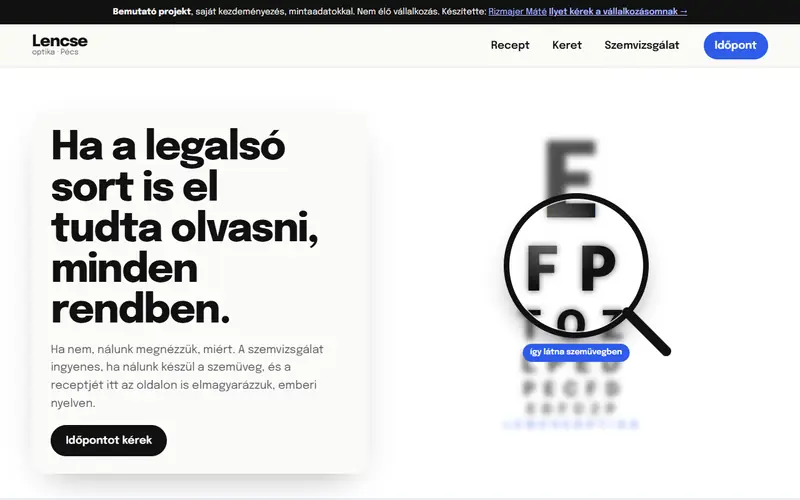
Lencse opticians: if you could read the bottom line
Demo opticians: the landing is a blurred eye chart that turns sharp under a draggable loupe. It explains the prescription numbers in plain language, recommends a lens with a price, and suggests frames for a face shape. My own initiative, not client work.
Design, build, deploy
The problem
To most people a prescription is a meaningless row of numbers, with no idea what the lenses will cost. Optician sites rarely help, so the price is first heard at the counter.
What I built
The chart has two layers: a blurred one and a sharp copy the loupe cuts a circle out of; it moves by mouse, finger or arrow keys. The prescription form takes quarter steps and explains each line; from the power it recommends a lens index and a pair price. The explanation and the recommendation are a tested module.
Stack
Demo project
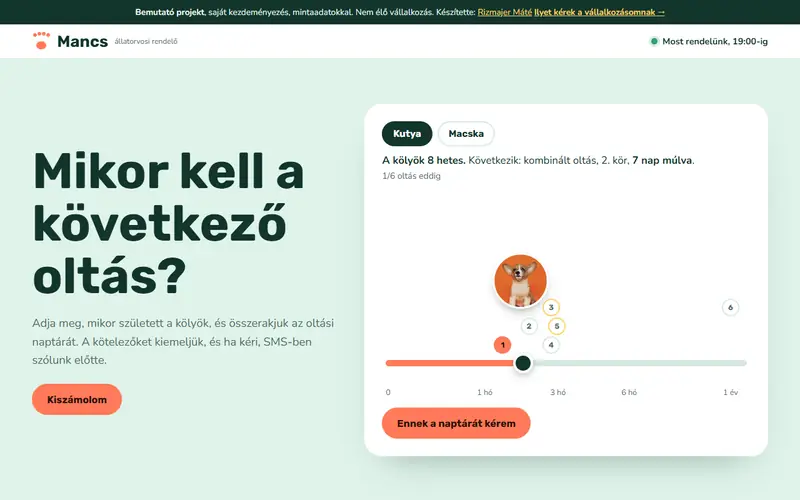
Mancs vet clinic: when is the next shot due?
Demo vet clinic: the landing has a growth ruler where the puppy moves and grows with age and the vaccinations fill in as paws. The full schedule is built from the birth date, and an SMS reminder can be requested. My own initiative, not client work.
Design, build, deploy
The problem
Most owners do not know offhand when the next shot is due, and the mandatory rabies shot easily slips. The clinic reminds them by phone, if at all.
What I built
The ruler uses a square-root scale so the busy first months stay readable; the photo, the slider and the paws share that scale. Dogs and cats get their own plans. The schedule marks past shots as missed until ticked and shows the next one for yearly repeats. The plan and the reminder date are a tested module.
Stack
Demo project
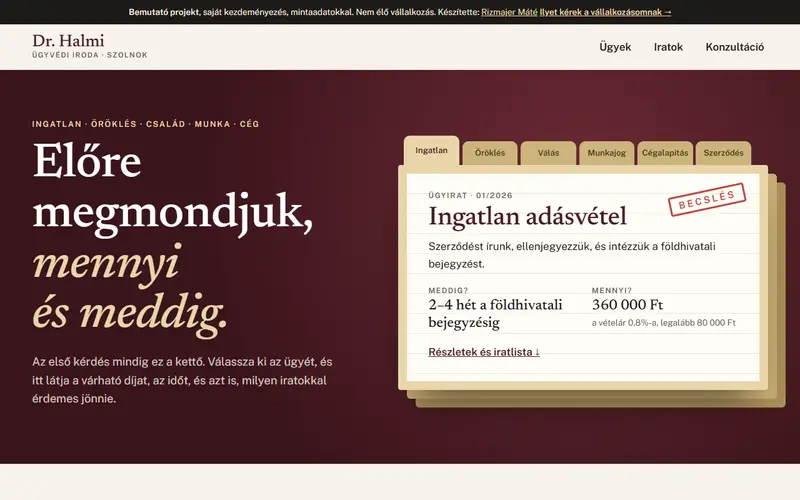
Dr. Halmi law office: cost and time, up front
Demo law office: the landing is a case file with a tab per case type. A tab brings that file forward with the expected fee and duration, followed by a printable bring-along checklist and consultation booking. My own initiative, not client work.
Design, build, deploy
The problem
Most people go to a lawyer without knowing the cost or how long it takes, and half the papers are missing at the first meeting. Most office sites only list practice areas.
What I built
Six case types, each with its own file: what we do, how long it takes, what it costs (property: 0.8% of the price, at least 80,000 HUF). Tabs also switch with arrow keys, and the choice carries into the details and the checklist, which can be ticked and printed. The fee logic is a tested module.
Stack
Demo project
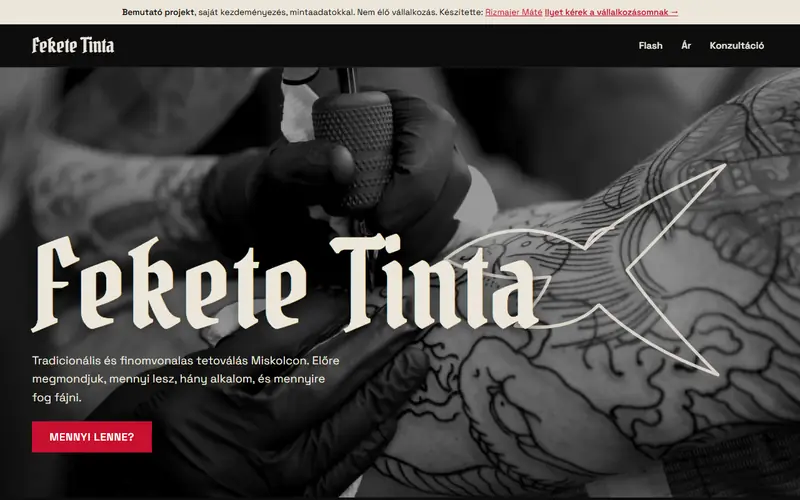
Fekete Tinta tattoo studio: cost and pain, up front
Demo tattoo studio: the flash designs draw themselves as stencils, each is tattooed only once, and taken ones are struck through. The estimator gives a price and time range, the number of sessions and a pain level from placement, size and style. My own initiative, not client work.
Design, build, deploy
The problem
Anyone wanting a tattoo messages the studio the same questions: how much, how many sessions, how painful. Answers take days, and meanwhile the client asks elsewhere.
What I built
The designs are SVG line art that draws itself as a stencil when the sheet comes into view and redraws in red ink on hover; each can be claimed once, never under 18. The estimator works from body part, size and style, split into sessions of at most 4 hours. The estimate is a tested module.
Stack